
Specialist certification, in person, the deepest track we run
Locs Specialist
A client who starts locs with you may still be in your chair in ten years. Every other service in braiding is installed and eventually removed. Locs are grown.
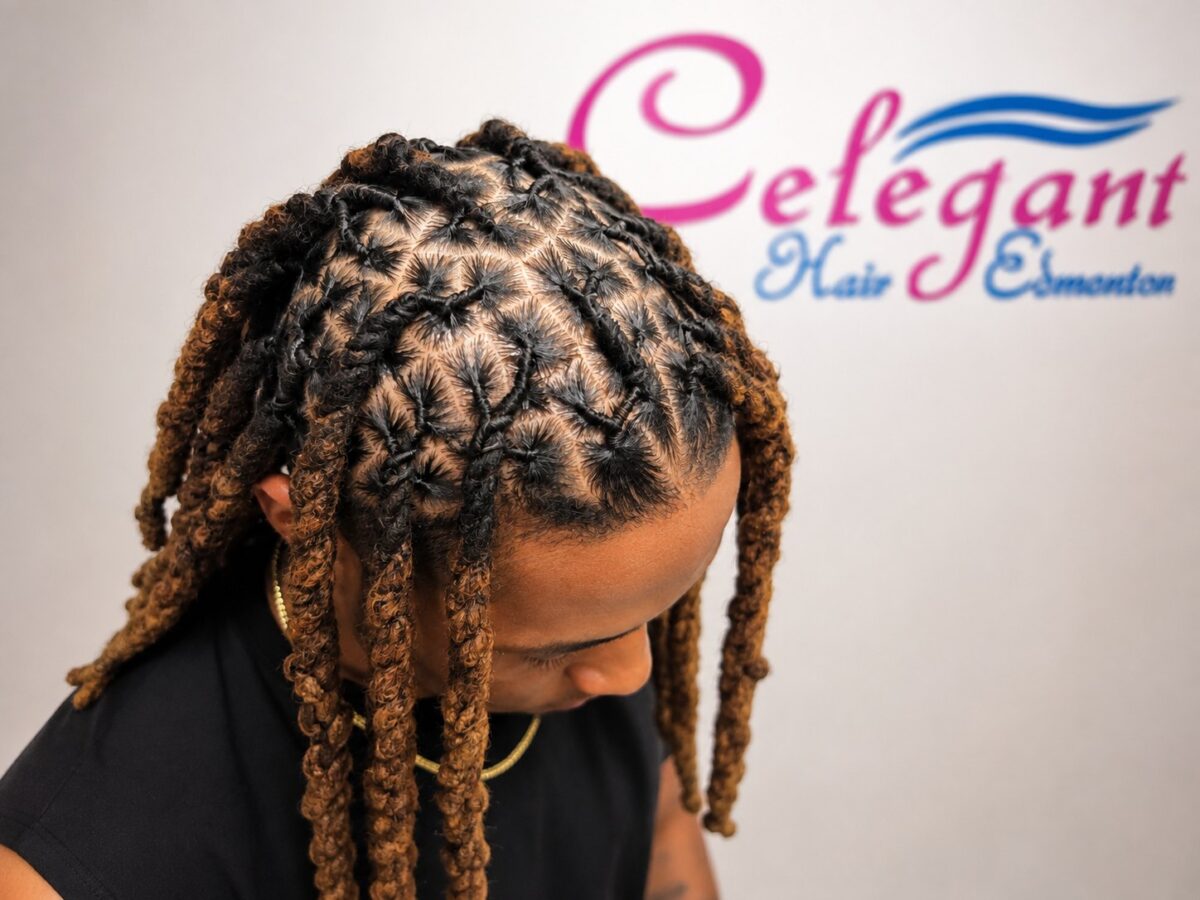
Locs are not a service. They are a relationship.
The parting grid you make on day one is the grid your client wears for the rest of their loc journey. The retwist you do six weeks from now is one of roughly two hundred you will do for them. And the day their loc breaks, because one day it will, you are either the person who can reattach it, or the person who tells them it is gone.
This is the deepest certification Celegant runs. Six modules covering how hair actually locks, every creation method, every maintenance method, repair, extensions, and the consultation that starts a decade-long relationship honestly.
Course facts
- Level
- Specialist. Open to experienced braiders and to Foundations graduates
- Format
- In person, Edmonton
- Language of instruction
- English
- Duration
- 10 weeks, 6 modules, 30 lessons
- Schedule
- Starts June 2027. Class days and times are published when enrolment opens.
- Class size
- Maximum 8 students, 2 instructors
- Location
- Unit 316, 8925 51 Ave NW, Edmonton, AB T6E 5J3
- Contact hours
- 60 supervised hours
- Kit
- Mannequin head with human hair, tripod stand, hair clips, rat tail comb and braiding hair, included at no extra cost
- Certificate
- Professional Specialist Certificate in Locs
- Tuition
- $1,997 CAD
- Next intake
- 1 June 2027
This is the longest specialist track, and it carries the same contact hours as the Foundations flagship. You practise on a mannequin or locked practice hair. We do not use live models. Assessment is a six-part capstone taken in person in the final week.
To complete the certification you need at least 80% attendance and at least 70% on your assessments, which are assignment based. There is no deposit. You can pay in full, or split the cost into 4 interest-free instalments with Afterpay at the Square checkout, at no extra cost to you.
An honest note about practising locs
Locs are the hardest specialty to practise on, for one obvious reason: real locking takes months. A fresh mannequin cannot show you a real retwist, a real repair, or the difference between a teen loc and a mature one.
So the maintenance, repair and extension modules are designed around locked practice hair and loc mannequins at different stages. That is a genuine cost and a genuine planning requirement, and we would rather tell you about it than let you discover it partway through the course.
What we supply. You work on mannequin heads suited to loc work, provided by us, so you can practise creation, retwisting, interlocking and repair without needing to find a model. No live models are used in this certification.
Scope, and what this certification does not cover
It covers real loc creation on a client’s own hair, all core starter methods including instant and crochet-assisted locs, every maintenance method, repair, loc extensions, colour, and specialised finishes.
It does not cover installing pre-made loc-look hair by crochet. That is an attachment technique and it belongs to the Crochet Specialist track, where it is taught properly.
And it draws one more boundary honestly. Sisterlocks and microlocks are their own world: tiny, numerous, and often requiring specialised tools and separate training. Module 2 covers what they are, where a Locs Specialist can legitimately offer small or micro-sized locs within scope, and where to refer a client to a specifically trained practitioner instead. Knowing your scope is a mark of professionalism, not a limitation.
Tuition, published openly
$1,997CAD
- Early-bird $1,497 first 5 registrations, code LOCS at checkout
- Pay in full, or split it into 4 interest-free instalments with Afterpay at the Square checkout
- $33 per supervised contact hour
Because this track carries the most supervised hours of the six certifications at the same tuition, it is the lowest cost per supervised contact hour of any certification we run.
Why students choose Celegant
- Repair taught as its own module, not as a footnote
- Retwist tension checked by hand, student by student
- Creation, maintenance, repair and extensions each earn a module
- A professional skills certificate, not a provincial licence
What you will be able to do at the end
Take a client from the first honest conversation about what locs actually ask of them, all the way through to a repair five years later that saves the loc they thought they had lost.
- Explain how hair locks, the matting and binding process, and read the five stages of the journey: starter, budding, teen, mature and rooted
- Read loc anatomy at root, shaft and tip, and tell healthy locking from the warning signs at every stage
- Run the commitment consultation honestly: assessing hair, goals, lifestyle and readiness, setting real expectations about the awkward stages, and documenting the plan from day one
- Section and plan a permanent loc grid with consistent size and clean parts, knowing it cannot easily be changed later
- Create starter locs by every core method: comb coils, two-strand twist starts, braid starts, and instant or crochet-assisted locs
- Describe sisterlocks and microlocks accurately and know where the referral boundary sits
- Perform a clean palm-roll and comb retwist without over-tightening, the single most damaging habit in loc maintenance
- Perform interlocking in a consistent pattern, and know when it suits a client and when it does not
- Adjust maintenance method and frequency across every growth stage
- Wash and thoroughly dry locs, and counsel clients out of the no-wash myth
- Diagnose slipping, unravelling, thinning, bunching and marrying locs, and repair them
- Reattach a broken loc, reinforce a thinning root, combine two weak locs and separate merging ones
- Attach and seamlessly blend loc extensions for length and density
- Apply colour to locs safely, or blend pre-coloured extension locs as the lower-risk route
- Price a practice built on recurring maintenance, with packages
- Leave with a verifiable Professional Specialist Certificate in Locs
Who this certification is for
You want clients who come back every few weeks, not once a year. Maintenance is where the loc business lives. A loc client on a regular schedule is the most predictable income in braiding, and the least dependent on marketing.
You can retwist but you cannot repair. Retwisting is the appointment. Repair is the reason they stay with you. Module 4 is five lessons on diagnosis, slipping and unravelling repairs, reinforcing thinning roots, reattaching broken locs, and combining and separating.
You have over-tightened someone’s roots and seen the damage. Over-tightening is the number one danger in loc maintenance. It thins roots and causes traction damage slowly enough that you do not notice until it is serious. Module 3 compares a correct retwist with an over-tightened one, and your tension is checked by hand.
You want to offer instant locs. A client can walk out with mature-looking locs the same day rather than waiting through the awkward stages. It takes more time and more skill, and it prices accordingly.
You install crochet faux locs and clients keep asking about the real thing. This is the certification that lets you answer them.
You want to serve a style with real cultural weight, properly. Locs carry more history and meaning than almost anything else you will do. That is taught in module 1, before any technique, and carried throughout.
New to this? If you have not braided before, we would point you at the Celegant Foundations In-Person Braiding Intensive first. It is our recommended starting point for beginners, not a gate. There is no entry requirement for this certification. If you already braid to a professional standard, you can apply straight to it, and if you are not sure which is right for you, come and talk to us.
Skills and services this certification covers
Loc literacy and consultation
- The science of locking and the five growth stages
- Loc anatomy and health markers
- Cultural history and respectful practice
- The commitment consultation and expectation-setting
- Documenting a loc journey from day one
Creation
- Loc grid sectioning and planning: square, diamond and brick-lay patterns, the last offsetting every row like bricks in a wall
- Comb coils
- Two-strand twist starts
- Braid starts
- Instant and crochet-assisted locs
- Method selection by hair type, length, goals and lifestyle
- Full-head starter workflow and day-one aftercare
Maintenance
- Palm rolling and comb retwist, without over-tightening
- Interlocking, with two-point and four-point patterns
- Stage-appropriate maintenance from starter to rooted
- Scalp cleansing, loc washing and thorough drying
- Mature loc styling: updos, buns, barrel rolls, pipe-cleaner sets and braid-outs
- Home-care counsel and maintenance scheduling
Repair
- Diagnosis: slipping, unravelling, thinning roots, weak points, bunching and marrying
- Re-locking an unravelling root or tip with the crochet hook
- Reinforcing a thinning root before it breaks
- Reattaching a broken loc, and grafting to rebuild a weak point
- Combining thin locs and separating marrying locs
- The repair consultation with an anxious client
Extensions and specialised services
- Attaching pre-made loc extensions to natural hair or starter locs
- Seamless blending: size, texture and colour matching, invisible joins
- Weight and tension management
- Colour for locs, and pre-coloured extensions as the lower-risk route
- Loc jewellery, wraps, tapering and shaping
- Pricing and maintaining extended and specialised work
The curriculum, module by module
Six modules across ten weeks. Creation, maintenance, repair and extensions each earn a module of their own, which is why this track is longer than the other five.
Welcome, Orientation and Loc Literacy
Week 1. How hair actually locks, the five stages, cultural history, and the commitment conversation that starts a decade-long relationship honestly.
- What you learn. Why this track is different: a loc client is a relationship, not an appointment, which makes you part technician and part long-term advisor. Then the science, how hair actually locks, the matting and binding process, and the five stages of the journey: starter, budding, teen, mature and rooted. Loc anatomy at root, shaft and tip, and what each tells you about the loc’s health. How texture, density and length change how fast and how well hair locks. Then the cultural and spiritual history of locs across African, Caribbean and diaspora communities: the difference between honouring a style and appropriating it, serving clients from different backgrounds and belief systems with sensitivity, and speaking about locs in consultations and marketing accurately. Then the commitment conversation: assessing hair, goals, lifestyle and readiness, being honest about what locs require in time, patience and often permanence, setting real expectations for the awkward stages, and choosing a starter method together.
- Why it matters. The most important thing you will ever do for a new loc client is not a technique. It is an honest conversation that prevents regret and buys you a decade of trust.
- What you practise. A written reflection on what it means to be responsible for someone’s loc journey over years. A one-page locking-stages reference chart with the markers of each, which you will use to assess client locs for the rest of the track. A written artist statement on how you will honour the cultural significance of locs in your practice and marketing. A consultation role-play with a partner, observed by your instructor. And a loc consultation form you draft and refine for your capstone.
- The professional outcome. You can explain the locking process to a client in plain language, read where their locs are in the journey, and run a consultation that sets up a relationship rather than a transaction.
Starter Locs and Loc Creation Methods
Weeks 2 and 3, the first technical core. The permanent grid, then comb coils, twist starts, braid starts, instant locs, and the referral boundary.
- What you learn, part one. Sectioning first, and it is treated as the most permanent parting you will ever do. Loc size and count, and how section size decides loc thickness for the life of the locs. The grid patterns, square, brick-lay and diamond, and what each gives. Why consistency matters far more here than in any temporary style, and why the grid is very hard to change later.
- What you learn, part two. Comb coils, the classic starter for shorter and coily hair: the comb rotation that forms a coil from the root, even consistent coils across a head, the lengths and textures it suits, product choice for hold without buildup, and how coils look as they bud so you can counsel the client through it. Then two-strand twist starts and braid starts, which give more length and definition immediately and suit a wider range of textures, how each matures differently, and how to choose between coil, twist and braid for a given client. Then instant and crochet-assisted locs, using the crochet hook to interlock and compress hair into an immediately locked shaft so a client leaves with mature-looking locs the same day, controlling density and firmness for a natural look, and pricing the extra time and skill honestly. Then sisterlocks and microlocks: what they are, how they differ, the tools and training some methods require, where a Locs Specialist can offer small or micro-sized locs within scope, and where to refer out.
- What you learn, part three. Method selection and full-head starter workflow: the framework of hair type, length, goals, lifestyle and desired maturity speed, sequencing for consistency, pacing a long appointment, quality checkpoints across the head, and the day-one aftercare a client leaves with.
- Why it matters. How locs begin shapes the entire journey: the size, the pattern, the texture, and how they mature. Get the grid wrong and the client wears that mistake for years.
- What you practise. A full loc grid parted in a brick-lay pattern with consistent sizing, presented with your planned loc size and count. A section of comb coils judged on uniformity. A section of two-strand twist starts and a section of braid starts, with a note on which suited the hair better and why. Three instant locs with the compression on your best one reviewed.
- The professional outcome. A section of at least twelve to fifteen starter locs using two different creation methods, on a consistent grid, timed, with a note on which client each method would suit.
Loc Maintenance Services
Weeks 4 and 5, the second technical core, and where the business lives. Retwisting without over-tightening, interlocking, stage-appropriate care, washing, styling and home care.
- What you learn, part one. The retwist first: palm rolling new growth into the loc to encourage locking, and the comb retwist that tidies the root. Then the thing this lesson exists for, over-tightening, the number one danger in loc maintenance, how it thins roots and causes traction damage, and how little product you actually need to avoid buildup. Then interlocking: pulling the loc through its own base with a tool in a set rotation, two-point and four-point patterns held consistently, when it suits a client such as an active lifestyle or longer gaps between appointments and when it does not, the risks of over-interlocking and thinning, and why you generally do not switch a loc casually between retwisting and interlocking.
- What you learn, part two. Maintenance across the growth stages, because you maintain a two-week-old starter completely differently from a five-year-old mature loc: how little to do with starters, how to get a client through the unpredictable teen stage, and how gentle and how frequent to be with mature and rooted locs. Then washing, and the biggest myth in locs, that you cannot. Clean locs lock better and stay healthier. Washing technique that cleans without unravelling or leaving residue, residue-free versus buildup-causing products, scalp cleansing, and drying thoroughly enough to prevent mildew and odour.
- What you learn, part three. Styling mature locs: updos, buns, barrel rolls, curling and setting with pipe cleaners, rods and braid-outs, styling without stressing the roots, accessorising safely, and pricing styling as its own service. Then home-care counsel: the nightly routine, products to recommend and products to warn against, building a maintenance schedule by stage and lifestyle, and recognising problems early.
- Why it matters. A starter appointment happens once. Maintenance happens every few weeks for the life of the locs, which makes it the recurring revenue and the relationship that sustains an entire practice.
- What you practise. A palm-roll retwist on one section and a comb retwist on another, with roots reviewed for gentle tension, and your tension checked by hand, student by student. An interlocked section in a consistent pattern. A one-page maintenance guide matching method and frequency to each growth stage. A wash-and-thorough-dry protocol. A section of mature locs styled two ways. A home-care sheet you would give a new client.
- The professional outcome. Two maintenance methods performed cleanly on separate sections without over-tightening, plus a wash-and-dry protocol, a styled finish, and a maintenance schedule you would set for the client.
Loc Repair and Problem-Solving
Weeks 6 and 7. Diagnosis first, then slipping and unravelling, thinning and broken locs, combining and separating, and the repair consultation.
- What you learn, part one. Diagnosis first, because a misdiagnosis makes it worse. The common problems, slipping and unravelling, thinning roots, weak points, bunching and locs growing together, and reading the actual cause behind each: over-tightening, product buildup, tension, texture, neglect or damage. Distinguishing a cosmetic issue from a structural threat. Knowing when a problem is fixable, when it needs managing, and when a loc is genuinely lost, and how to say so honestly.
- What you learn, part two. Slipping and unravelling: re-locking an unravelling root with palm rolling or interlocking, using the crochet hook to pull loose hair back into the loc, repairing and sealing an unravelling tip, and blending the repair so it disappears. Weak, thinning and broken locs: reinforcing a thinning root with the crochet hook before it breaks, reattaching a broken loc to its root, grafting hair to rebuild a weak point, and managing locs weakened by buildup or years of over-tightening. Combining and separating: merging two thin locs into one stronger one invisibly, separating locs that are marrying at the root, and the regular separation that prevents marrying in the first place.
- What you learn, part three. The repair consultation, which is the part nobody teaches. Clients arriving for repair are usually anxious and sometimes upset, because they are facing the loss of something they have grown for years. Setting honest expectations about what a repair can and cannot achieve. Pricing repair fairly for its skill and time. Advising management rather than an intensive repair where that is the right call.
- Why it matters. Repair is the skill that separates a technician from a specialist, because it saves a client’s years-long investment when something goes wrong. It is the highest-trust, highest-value work a loc specialist does, and the work that makes someone your client for life.
- What you practise. Three problem locs examined, diagnosed and their causes written up, presented to your instructor. A slipping or unravelling loc created and repaired, before and after. A deliberately thinned loc reinforced and a cut loc reattached. Two locs combined and two marrying locs separated, documented before and after.
- The professional outcome. Three different loc problems diagnosed and repaired, one slipping or unravelling and one structural, each with the diagnosis, the before and after, and the counsel you would give the client.
Loc Extensions and Specialised Services
Weeks 8 and 9. Attachment methods, seamless blending, colour handled with care, and specialised finishes.
- What you learn, part one. Loc extensions let a client skip the wait, giving instant length and fullness, or a whole head of locs in a day. Attachment methods for pre-made extensions onto natural hair or starter locs, the crochet-attachment technique for a secure natural join, adding length to existing locs versus starting a full head with extensions, human versus synthetic extension hair and how each wears, and weight and tension management so extensions do not stress the natural hair. Then seamless blending, which is the art: matching extension size, texture and colour to the natural locs, hiding the attachment point, blending the transition as the natural loc grows into the extension, and consistency of size and hang across the head.
- What you learn, part two. Colour, treated with the care it demands. Locs take colour differently from loose hair because of density and saturation, and the rinsing challenge, getting all colour and product out of a dense loc, is real. The safe process, the cautions, protecting loc integrity, and blending pre-coloured extension locs as a lower-risk alternative to processing, plus knowing when to refer colour to a licensed colourist. Then specialised finishes: loc jewellery and accessories placed and secured with weight in mind, wrapped and decorated locs, tapering and shaping safely, and advanced textured looks. Then pricing and maintaining this work, because extensions and specialised services are your highest-value offerings and they carry their own aftercare and long-term counsel.
- Why it matters. These are the premium tier of a loc practice and the services that let you say yes to a client who wants locs without the wait, or wants to enhance the set they have.
- What you practise. Three loc extensions attached, with the join on your best one reviewed. An extension blended so the join is invisible. A colour effect using pre-coloured extension locs, or a written safe-colouring protocol. A specialised finish, whether accessories, a wrap or a shaped effect.
- The professional outcome. At least three extensions attached and seamlessly blended to a natural or starter base, plus one premium element, with a note on how you would price and maintain the work.
Certification Capstone and Becoming a Specialist
Week 10. Pricing a recurring-revenue practice, maintenance packages, a portfolio built on the journey, then the capstone.
- What you learn. Pricing a loc business, which is genuinely different from pricing every other specialty because it is built on recurring maintenance and decade-long relationships. Tiers across starter locs, maintenance covering retwist and interlock, repair, extensions and specialised work. The recurring-revenue model as the backbone of the practice. Pricing premium starter methods like instant locs for the time they actually take. The time-to-rate calculation, and loyalty pricing and maintenance packages. Then a portfolio, which for locs is uniquely powerful because the journey itself is the story: clean retwist roots, seamless extensions, repair saves, and starter-to-mature progressions documented over time.
- Why it matters. Price it right and you build the most stable, most predictable income in braiding.
- What you practise. A full loc price menu including a maintenance package idea, shared with the cohort. A six-image portfolio across at least three service types. Coached practice on your weakest area.
- The professional outcome. A menu, a portfolio, a credential and a one-to-one debrief.
Read the full ten-week breakdown
The download sets out all six modules, the creation methods, the repair work, the tools list and the six-part capstone. No payment on a first visit.
What you will actually be doing in the room
Because locs unfold over time, the teaching challenge is showing the journey. Wherever possible, sessions use real locs at different stages, starter, teen and mature, and real repair examples, because a locking journey cannot be faked on fresh mannequin hair.
- A written reflection on stewarding a client’s multi-year journey
- A locking-stages reference chart with the markers of each stage
- A written artist statement on honouring the cultural significance of locs
- A full consultation role-play, observed
- A loc consultation form you draft and refine
- A full loc grid parted in brick-lay with consistent sizing
- A section of comb coils
- A section of two-strand twist starts and a section of braid starts
- Three instant locs, crochet-assisted
- A palm-roll retwist and a comb retwist, with tension checked by hand
- An interlocked section in a consistent pattern
- A stage-by-stage maintenance guide
- A wash-and-thorough-dry protocol
- Mature locs styled two ways
- A client home-care sheet
- Three problem locs diagnosed with causes written up
- A slipping or unravelling loc created and repaired
- A thinned root reinforced and a cut loc reattached
- Two locs combined and two marrying locs separated
- Three loc extensions attached and blended
- A colour effect using pre-coloured extensions, or a written safe-colouring protocol
- A specialised finish: jewellery, a wrap or a shaped effect
Assessments and what you leave with
Module capstones. Module 2, starters by two methods on a consistent grid, and module 3, two maintenance methods without over-tightening plus a wash protocol and styling, are the two major technical checkpoints. The module 4 repair capstone, three problems diagnosed and repaired, is the one that proves you are a specialist rather than a technician.
The final capstone, assessed in person, in six parts
- Creation. A section of starter locs by an appropriate method, on a consistent parting grid with consistent sizing.
- Maintenance. A clean, non-over-tightened retwist and an interlocked section, plus a wash-and-dry protocol.
- Repair or extensions. Either diagnose and repair two loc problems, one of them structural, or attach and seamlessly blend loc extensions with one premium element.
- Documentation. The parting grid, the starters, the maintenance roots, the repair or extension before-and-afters, and your timed work.
- Service package. A loc consultation form, a tiered price menu including a maintenance package, and a personalised home-care sheet.
- Reflection. Your biggest growth in the track, the loc service you most want to master next, and how you will steward a client’s multi-year journey.
On passing you receive the verifiable Professional Specialist Certificate in Locs, a six-image portfolio across at least three service types, a tiered price menu with a maintenance package, and a consultation form and client home-care sheet you wrote yourself.
Coming back for a second specialty. 20% off your next specialty certification when you enrol within 90 days of completing one. That is a standing offer, not a launch promotion.
The four proofs of a loc specialist
Signature techniques you will own
The non-damaging retwist
Clean, tidy, and gentle enough that the client’s roots are as thick in five years as they are today. The over-tightening comparison is checked on every student by hand.
The crochet repair
Pulling loose hair back into a loc so the repair disappears. It is the technique behind re-locking an unravelling root, reinforcing a thinning one, and reattaching a loc that broke.
Instant locs
Crochet-assisted compression that produces a firm, mature-looking loc the same day, with density and firmness controlled for a natural result.
The permanent grid
A parting grid with consistent size and clean parts, planned for the client’s density and goals, because they will wear it for the life of the locs.
Tools and materials
- Locked practice hair or loc mannequins at different stages
- An interlocking tool
- A crochet or latch hook, a small hooked needle used for instant locs, repair and extensions
- Rat-tail comb, clips and spray bottle
- Loc gel and residue-free or clarifying shampoo
- Small scissors
- Human and synthetic loc extensions
- Pre-coloured extension locs
- Loc jewellery, cuffs and wrapping materials
- Pipe cleaners and rods for setting
- Towels for the wash-and-dry protocol
- A notebook for consultation practice
- A camera or phone for root, join and before-and-after documentation
Your kit comes with the course. Mannequin head with human hair, tripod stand, hair clips, rat tail comb and braiding hair, included at no extra cost. It is yours to keep. If you already own some of it, bring what you have and we will supply the rest.
You are given a locking stages and maintenance guide. It maps all five stages, from starter through budding, teen and mature to rooted, with what each looks like, roughly how long it lasts, and what you do at each one, which is often less than a student expects. It also compares retwisting against interlocking on hold time, suitability and risk, and covers tension, thinning at the root, washing, product build-up and repair.
Tuition and payment
Full certification
$1,997CAD
- Early-bird $1,497 first 5 registrations, code LOCS at checkout
- Pay in full, or split it into 4 interest-free instalments with Afterpay at the Square checkout
- $33 per supervised contact hour
All prices include GST. The figure above is what you pay.
No deposit, and no interest. Pay in full, or split the cost into 4 interest-free instalments with Afterpay at the Square checkout, at no extra cost to you. Afterpay is offered through Square. You choose it at the payment step inside the secure Square checkout, not on a separate page.
Funding. See tuition, instalments and funding options.
How enrolment works. Download the curriculum first: every module, every lesson, and the six-part capstone. If it is right, you can reserve your seat from there. No first-visit checkout.
Schedule and location
In person only, and longer than the other five certifications because this discipline is genuinely deeper. Creation, maintenance, repair and extensions each earn their own module. The over-tightening comparison in particular is checked live on every student, because it is the single most damaging habit in loc maintenance and it is invisible to the person doing it.
The specialty certifications run two afternoons a week: Starts June 2027. Class days and times are published when enrolment opens.. The next intake is 1 June 2027. Contact hours, class size and the address are all in the course facts above and in the footer of every page.
Finding us. Unit 316 is in building 3. It is not on a third floor. The site is single storey, so there are no stairs and no lift between the car park and the classroom. Parking is ample and includes two designated accessible spaces, and the salon and store are wheelchair accessible.
The washroom is not a wheelchair-accessible washroom. A wheelchair fits inside it, but there is not enough clearance to turn around and there are no grab bars. We would rather tell you that now than have you find out on the day.
Who teaches this

Dr. Tina
Lead Instructor
Dr. Tina is a Master Braider and the Lead Instructor of Celegant Braiding Academy. She has braided more than 3,500 clients since 2016, has run her own salon since 2015, and teaches every Academy program personally, with a co-instructor alongside her.
- Master Braider
- Braiding clients since 2016, and running her own salon since 2015
- Experienced braider and loctician
- Experienced wig maker, and wig and weave installer
- A working braider at Celegant Hair Edmonton, not only an owner
Why that matters for this particular certification. Locs are a published service at Celegant Hair Edmonton, the professional braiding salon at the same address, and the salon serves a repeat client base month after month. This track is built around the same thing that salon runs on, clients who come back, and it is taught by someone who has managed that relationship commercially as well as technically.
Dr. Tina teaches from experience rather than from theory, with a real example behind every point, and she adapts her pace and her explanations to how each student in the room actually learns. Her approach in her own words is on the About page.
Where this leads next
Crochet is the honest companion: crochet faux locs serve the client who wants the look without the commitment, and crochet is also where the hook skills you use for repair and instant locs come from. Twists transfers directly, because two-strand twist starts are one of the core loc creation methods, and it gives you something to offer clients who are not ready to commit to locs. The Empire Blueprint is the pricing, retention and systems training that turns a recurring-revenue practice into a business. It is online, self-paced and open to any experience level, and it opens in June 2027.
Specialty certification
Crochet Specialist
The five professional install methods and a full style menu, curly, straight, faux locs and boho, built for speed without losing the finish.
- 9 weeks
- 54 contact hours
- In person, Edmonton
$1,997
Early-bird $1,497, first 5 registrations, code CROCHET at checkout
Specialty certification
Twists Specialist
Full-head protective twists and flat twists with seamless extensions, plus passion, Senegalese, kinky and spring twists.
- 8 weeks
- 48 contact hours
- In person, Edmonton
$1,997
Early-bird $1,497, first 5 registrations, code TWISTS at checkout
Business program
Certified Salon Business Professional: The Empire Blueprint
The business of running a salon, online and self-paced: setup, financials, staffing, client systems, marketing, growth and a capstone business plan.
- Online, self-paced, lifetime access
$2,997
Early-bird $2,497, first 5 registrations
Questions braiders actually ask
What is the difference between starter locs, instant locs and loc extensions?
Three different answers to the same client question, which is how long until I have locs. Starter locs, whether comb coils, twist starts or braid starts, begin the natural locking process, and the client grows through the budding and teen stages over months. Instant locs use a crochet hook to compress and interlock hair into a firm, mature-looking shaft the same day, a premium service that shortcuts the awkward stages. Loc extensions attach pre-made locs for instant length and density, or a full head in a day. All three are taught, and choosing between them for a client is part of the consultation training.
Is retwisting bad for locs?
Retwisting is not. Over-tightening is. It is the number one danger in loc maintenance: it thins roots, causes traction damage, and does it slowly enough that neither of you notices until it is a problem. Module 3 shows an over-tightened root beside a correctly retwisted one, and your own tension is checked by hand rather than by eye across the room.
This guidance is educational and is not medical advice.
Retwist or interlock, which should I be doing?
It depends on the client. Interlocking pulls the loc through its own base, holds longer, and suits active clients and people who go longer between appointments. Retwisting is gentler and more forgiving. Interlocking carries its own risks, including over-interlocking, thinning and weak points, and you generally do not switch a loc casually between the two methods. Module 3 gives you the framework and the patterns.
Can you really wash locs?
Yes, and that is the biggest myth in the discipline. Clean locs lock better and stay healthier. What matters is technique: washing without unravelling, using residue-free products because buildup is the enemy of locs, and drying thoroughly enough to prevent mildew and odour. Module 3 covers all of it, including the drying step most people rush.
Can a broken loc actually be saved?
Often, yes. A broken loc can be reattached to its root, a thinning root can be reinforced with the crochet hook before it breaks, and a weak point can be rebuilt by grafting. Sometimes it cannot be fully saved, and the course teaches that conversation too, because honest counsel with an upset client is a skill, and it is what makes them stay with you. Module 4 is five lessons on exactly this.
What if my client’s locs are growing together?
They are marrying at the root, and they need separating before they merge permanently. Module 4 covers separating marrying locs cleanly, combining two thin locs into one stronger one invisibly, and the regular separation routine that prevents the problem in the first place.
Do you teach sisterlocks or microlocks?
Not as installable methods, and we say so plainly. Sisterlocks and microlocks are tiny, numerous, and often require specialised tools and separate training. Module 2 teaches you what they are, how they differ, where a Locs Specialist can legitimately offer small or micro-sized locs within scope, and when to refer a client to a specifically trained practitioner. Knowing your scope is professionalism, not a limitation.
Are crochet faux locs the same thing?
No. Crochet faux locs install pre-made loc-look hair onto a braided base, a temporary attachment technique that is taught in the Crochet Specialist certification. This track is about locs grown from a client’s own hair, and everything that follows over the years. The two pair well. They do not substitute for each other.
Can I colour locs?
Carefully. Locs take colour differently from loose hair because of their density and saturation, and the real difficulty is rinsing, getting every trace of colour and product out of a dense loc. Module 5 covers the safe process and the cautions, teaches blending pre-coloured extension locs as the lower-risk alternative, and is honest about when colour should be referred to a licensed colourist.
How do I practise if real locking takes months?
Honestly, that is the hardest part of this specialty, and we have said so on this page rather than hiding it. The maintenance, repair and extension modules are designed around locked practice hair and loc mannequins at different stages, and around real models at different points in their journey where that can be arranged. The exact provision for each cohort is still being confirmed and is flagged above.
Do I need to take Foundations first?
No. There is no entry requirement for this certification. Anyone with enough experience can apply directly. Foundations is our recommended starting point for beginners, not a gate. What this program does assume is that you can already part cleanly and hold even tension. If you cannot yet, start at Foundations.
Is this a licence to work on hair professionally in Alberta?
No. Celegant issues a professional skills certificate, not a provincial trade certificate, licence or government credential. Read the honest answer on Alberta’s rules.
What if I miss a session?
See refunds and rescheduling for the current policy.
What this credential is, and what it is not
Celegant Braiding Academy issues a professional skills certificate. It is awarded by us, based on assessed practical work. It is not a provincial trade certificate, not a government licence, and not an apprenticeship credential.
In Alberta, Hairstylist is a compulsory-certification designated trade. Braiding is not named specifically in the government sources we reviewed, and we will not guess on your behalf. The authoritative answers live with the province:
- Restricted Activities List, Hairstylist, Alberta Apprenticeship and Industry Training: tradesecrets.alberta.ca
- Barber and Hairstylist certification in Alberta: alis.alberta.ca
- Apprenticeship and Industry Training Client Service Offices: call them and ask about your exact situation.
If your plan is to cut and chemically treat hair as a licensed hairstylist, the apprenticeship route is the one you want, and we will tell you that plainly. Our program is for braiding, twisting, locing, crochet and install work, and for the business skills that go with them.
Educational information only. This is not legal advice.
Scalp and hair safety. Tension, traction and scalp-health guidance in this program is educational and is taught for the safe practice of protective styling. It is not medical advice. Refer clients with hair loss, scalp conditions or suspected reactions to a physician or another qualified professional.
Ready?
Download the full curriculum: every module, every lesson, the creation methods, the repair work, and the six-part capstone.