Specialist certification, in person in Edmonton
Crochet Specialist
Crochet is the only discipline in braiding where speed is the product. The protective look of braids and twists, installed in a fraction of the time, gentle on the hair, open to almost any texture or colour.
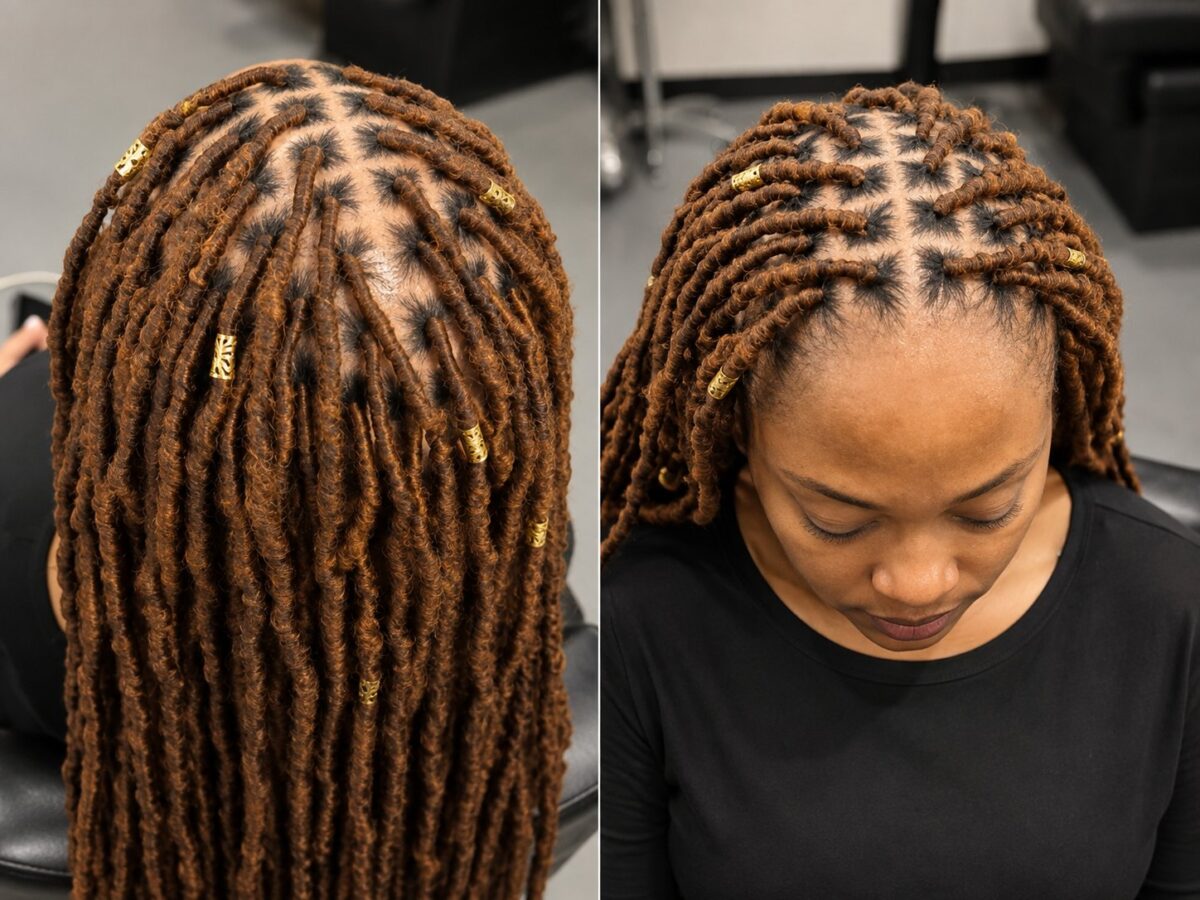
Speed is not a compromise. It is the business model.
A full head in a fraction of a braid install’s time is the service that lets one braider serve more clients in a week without adding hours to the day. That is the honest core of the offer, and this certification treats it as a business decision as much as a technique.
But there is not one crochet technique. There are five professional install methods, and they trade off naturalness, install time, tension and price differently. Choosing the right one for the client in your chair is the judgement that separates a specialist from someone who only knows one way to do it. This certification teaches all five.
Tuition, published openly
$1,997CAD
- Early-bird $1,497 first 5 registrations, code CROCHET at checkout
- Pay in full, or split it into 4 interest-free instalments with Afterpay at the Square checkout
- $37 per supervised contact hour
That per-hour figure buys five install methods and a full style menu, not one technique.
A scope note, so you know exactly what you are buying
Crochet faux locs are taught in this certification. Installing pre-made loc hair by crochet, distributed and secured so it hangs naturally, and customised for length and loc ends. It is an attachment technique and it belongs here.
Real loc creation is not. Starter locs, retwists, interlocking, loc repair and loc extensions on a client’s own growing hair are an entirely different discipline built on a years-long client relationship. That is the Locs Specialist track, and each of the two stands on its own.
Why students choose Celegant
- Five professional install methods, not one
- Knot invisibility checked by hand, student by student
- Real-time install runs so you feel the genuine pace
- A professional skills certificate, not a provincial licence
Course facts
- Level
- Specialist. Open to experienced braiders and to Foundations graduates
- Format
- In person, Edmonton
- Language of instruction
- English
- Duration
- 9 weeks, 6 modules, 29 lessons
- Schedule
- Saturdays and Sundays, 10:00am to 1:00pm
- Class size
- Maximum 8 students, 2 instructors
- Location
- Unit 316, 8925 51 Ave NW, Edmonton, AB T6E 5J3
- Contact hours
- 54 supervised hours
- Kit
- Mannequin head with human hair, tripod stand, hair clips, rat tail comb and braiding hair, included at no extra cost
- Certificate
- Professional Specialist Certificate in Crochet
- Tuition
- $1,997 CAD
- Next intake
- 1 June 2027
Install methods taught: cornrow crochet, wrapped singles, perimeter illusion, connected singles and miracle knots. You practise on a mannequin. We do not use live models. Assessment is a five-part capstone taken in person in the final week.
To complete the certification you need at least 80% attendance and at least 70% on your assessments, which are assignment based. There is no deposit. You can pay in full, or split the cost into 4 interest-free instalments with Afterpay at the Square checkout, at no extra cost to you.
What you will be able to do at the end
Take a client’s request, choose the install method that fits their look, their hair, their budget and their available time, then deliver it fast, invisibly knotted, evenly distributed and cut to their face.
- Braid a flat, low-profile crochet base, straight-back or beehive, that hides knots and supports any style
- Execute the latch-hook attachment cleanly and securely, at pace
- Tie an invisible knot, the knot that secures crochet hair to the braid, so that it sits flat, holds, and does not announce itself at the scalp
- Build even density from nape to crown with no thin spots and no over-stuffed zones
- Execute all five professional install methods: cornrow crochet, wrapped singles, perimeter singles with a cornrow centre, connected front singles, and miracle knots
- Choose between them on the basis of naturalness, time, tension and price, and explain that choice to a client
- Install curly and afro styles, sleek straight styles, crochet faux locs, boho and pre-braided patterns
- Cut, layer and face-frame an install so it stops looking like it came out of a pack
- Take an install down safely by cutting knots without cutting natural hair
- Price crochet so its speed is a margin advantage rather than a reason to undercharge
- Leave with a verifiable Professional Specialist Certificate in Crochet and a portfolio spanning at least three styles
Who this certification is for
Your schedule is full of eight-hour services and you are exhausted. Crochet is how you add clients without adding hours. That is the actual argument, and it is the reason most working braiders take this track.
Your knots show. It is the number one giveaway of amateur crochet, and it has a specific fix: a knot method that sits flat and hides under the hair, taught over a full lesson with a scalp close-up standard.
You only know the cornrow method. It is fast and secure, and the part and perimeter can read less natural. Four other methods solve exactly that, at different time and price points.
Your installs look like they came out of the pack. Cutting and customising is a full lesson. A crochet install that has not been cut to the client’s face looks like a wig, and clients can tell.
You want to offer faux locs without the wait. Crochet faux locs give the look in a single appointment. Real loc cultivation is a separate discipline, as set out in the scope note above.
You want a service that scales. Crochet is the most approachable specialty to learn and the most scalable to run. That is its market advantage, and this certification treats it as one rather than as a discount on its value.
New to this? The cornrow base is everything here, so if you cannot yet braid a clean one, we would point you at the Celegant Foundations In-Person Braiding Intensive first. It is our recommended starting point for beginners, not a gate. There is no entry requirement for this certification. If you already braid to a professional standard, you can apply straight to it, and if you are not sure which is right for you, come and talk to us.
The five professional install methods
| Detail | Cornrow crochet | Wrapped singles | Perimeter illusion | Connected front singles | Miracle knots |
|---|---|---|---|---|---|
| What it is | Pre-made hair looped onto cornrows, worked perimeter inward | Each loc attached to its own small plait, then wrapped | Rows of singles around the hairline hiding a cornrow centre | Front singles connected to one another, cornrowed back | Pre-threaded pieces knotted on the thread, not the hair |
| Where it shines | Speed, fullness, security | Naturalness per loc | Natural where it is seen, fast where it is not | Parting flexibility and a secure hairline | An invisible flat root, and boho braids in a few hours |
| Where it does not | Part and perimeter can read less natural | Slower per loc | Still a cornrow centre underneath | More setup than plain perimeter singles | Needs pre-threaded pieces in stock |
| Relative install time | Fastest | Slowest | Fast | Moderate | Fast for the look it gives |
| What you practise | A quarter-head | Five wrapped single plaits | A mapped and installed section | A connected front into a cornrow back | Three plaits, with a root close-up |
Cornrow crochet
- What it is
- Pre-made hair looped onto cornrows, worked perimeter inward
- Where it shines
- Speed, fullness, security
- Where it does not
- Part and perimeter can read less natural
- Relative install time
- Fastest
- What you practise
- A quarter-head
Wrapped singles
- What it is
- Each loc attached to its own small plait, then wrapped
- Where it shines
- Naturalness per loc
- Where it does not
- Slower per loc
- Relative install time
- Slowest
- What you practise
- Five wrapped single plaits
Perimeter illusion
- What it is
- Rows of singles around the hairline hiding a cornrow centre
- Where it shines
- Natural where it is seen, fast where it is not
- Where it does not
- Still a cornrow centre underneath
- Relative install time
- Fast
- What you practise
- A mapped and installed section
Connected front singles
- What it is
- Front singles connected to one another, cornrowed back
- Where it shines
- Parting flexibility and a secure hairline
- Where it does not
- More setup than plain perimeter singles
- Relative install time
- Moderate
- What you practise
- A connected front into a cornrow back
Miracle knots
- What it is
- Pre-threaded pieces knotted on the thread, not the hair
- Where it shines
- An invisible flat root, and boho braids in a few hours
- Where it does not
- Needs pre-threaded pieces in stock
- Relative install time
- Fast for the look it gives
- What you practise
- Three plaits, with a root close-up
Skills and services this certification covers
Foundations for crochet
- Flat, low-profile straight-back crochet base
- Beehive, or circular, base for ponytails, updos and dense curly styles
- Base direction and part planning
- Edge-safe perimeter and hairline rows
Core install technique
- Latch-hook attachment
- The invisible knot
- Even distribution and density planning
- Full-head sequencing and speed
- Six-fault diagnosis and correction
Style variations
- Curly, wavy and afro styles
- Straight and sleek styles with a blended part
- Crochet faux locs
- Boho and pre-braided or pre-twisted patterns
- Colour and texture mixing within one install
- Cutting, layering and face-framing
- Refresh, safe takedown and aftercare
The curriculum, module by module
Six modules across nine weeks. Module 4, the five install methods, is the heart of the certification and the reason this track takes nine weeks rather than three.
Welcome and Specialist Orientation
Week 1, first session. Hooks, hair literacy, and the honest baseline check on your cornrow braid-down, the flat cornrow base a crochet install attaches to.
- What you learn. What the credential certifies and what it does not. Why crochet is its own discipline, a latch-hook method for attaching pre-made hair to a braided base, unlike any hand-braided style. Then hooks: the latch hook, a small needle with a hinged catch that draws hair through the braid, versus the plain crochet hook, sizes, and when each is right. Then hair literacy, pre-looped versus bulk, and the main textures of straight, wavy, curly, water wave, faux locs and braid hair, plus estimating how much hair a full head needs by style.
- Why it matters. Crochet needs almost nothing, which is part of its appeal. But the right hook and the right hair are most of the result.
- What you practise. A baseline video of your current cornrow braid-down. The entry-standard checklist run live: a flat even base, secure knots, no visible attachment, even distribution, a natural finish. And you assemble and label a hair inventory of at least three textures plus your hooks.
- The professional outcome. You know whether your base is good enough, and you have a station and inventory ready for a fast install.
The Crochet Foundation
Weeks 1 and 2. Cornrows as a grid rather than a style, the two base patterns, base planning, and edge safety at the perimeter.
- What you learn. How to stop seeing cornrows as a style and start seeing them as a grid to attach to: flat, even and low-profile, with row spacing close enough to hold density and open enough for the hook to grab cleanly, and ends sealed so nothing pokes through. Then the two base patterns that cover most crochet work: the straight-back for hair worn down or back, and the beehive or circular base for ponytails, updos and dense curly styles. Then base planning, deciding where the part goes and how the hair falls before any hair goes in, and how base spacing and hair amount combine to produce fullness. Then perimeter and edge safety, keeping the hairline rows light, knowing where to attach near the hairline for a natural undamaging finish, and when a client’s edges mean you adjust the plan.
- Why it matters. The base controls everything above it. A bulky or lifting base shows through the install and catches the hook, and no amount of good attachment work rescues it.
- What you practise. A flat straight-back crochet base focused on staying low and even. A beehive base. A base planned and braided for a specific finished look you have chosen, with style, part and density noted. An edge-safe perimeter with light hairline rows.
- The professional outcome. A complete, install-ready base for a named style, with a sealed edge-safe perimeter and a timed braid-down.
The Crochet Install Technique
Weeks 3 and 4, the core. The latch-hook motion, the invisible knot, distribution, speed, the six faults and full-head sequencing.
- What you learn. The latch-hook motion, built slowly then to speed: loading the hook, hooking under the cornrow, pulling the loop through cleanly without snagging the base, and the lock that secures it. Then the invisible knot, the standard loop knot versus the knotless-look method, tied flat, secure without being tight enough to damage, and hidden at the scalp. Then distribution: how much hair per attachment and per row, building even density nape to crown, avoiding thin spots and over-stuffed zones, and filling the part area and perimeter naturally. Then speed, which is crochet’s entire value proposition, built from hook rhythm, pre-prepping and pre-looping hair, and realistic benchmarks by style mapped to your hourly rate. Then the six faults, visible knots, slipping attachments, thin spots, a bulky lifted result, a snagged base and tangling in the installed hair, each recreated deliberately and corrected live. Then full-head sequencing, with the part and perimeter left for last.
- Why it matters. This is where the bulk of the practice volume lives, and where the two things that betray an amateur, a lumpy foundation and a knot you can see, get fixed for good.
- What you practise. Ten attachments along a base row. Ten invisible knots, assessed on a scalp close-up of your best three. A quarter-head focused on even distribution, photographed from several angles. A timed section, efficiency drills, then a fresh timed section. Two faults deliberately created and corrected. Then the start of a full-head install.
- The professional outcome. A half-head basic crochet install with clean attachment, invisible knots, even density and an edge-safe perimeter, with three knot close-ups and a total timed install. This is the central technical proof of the certification.
Professional Install Methods, the heart of this certification
Weeks 5 and 6. First the judgement, then all five techniques: cornrow crochet, wrapped singles, the perimeter illusion, connected front singles and miracle knots.
- What you learn, part one. First the judgement, then the techniques. Every method balances four trade-offs, naturalness, install time, tension and edge safety, and price, and the module opens by mapping all five against those four so you can choose rather than default. Cornrow crochet is the fast, secure workhorse: cornrow the head, loop pre-made hair or locs onto the braids starting at the perimeter and working in, then secure it flat. It shines on speed, fullness and security. Its weakness is that the part and perimeter can read less natural.
- What you learn, part two. Wrapped singles, meaning butterfly, gypsy and Nu locs. Braid small, consistently sized single plaits as individual bases. Attach each loc to its own braid rather than to a cornrow. Then wrap the extension around the natural-hair braid, firm at the root and looser down the length for the signature texture, with a folding trick for shorter loc lengths and a sealed end. Slower per loc, and it reads far more natural. Then perimeter singles with a cornrow centre, the specialist’s best of both: two to three rows of singles around the hairline so the perimeter looks entirely natural, with faster cornrows hidden in the middle. The result gives the illusion the whole head is singles at a fraction of the install time. Then connected front singles, a refinement of the illusion method where the front singles are connected to one another, which improves naturalness, security and parting flexibility at the hairline, with the back staying cornrowed for speed.
- What you learn, part three. Miracle knots, the technique behind full boho braids in a few hours instead of eight or nine. Braid the natural hair into simple plaits, then add pre-threaded crochet pieces strand by strand. Because the knot forms on the thread rather than on the hair, the root stays invisible and flat. Spacing runs roughly every two inches, with two to four pieces per braid, working root pieces first for speed. The signature fault, the hair knotting instead of the thread, is recreated and rebalanced in front of you.
- Why it matters. This is the depth that separates a crochet specialist from a one-method installer, and it is the reason this certification takes nine weeks rather than three.
- What you practise. A written decision guide for three hypothetical clients: one wanting maximum naturalness, one wanting fast and affordable, one wanting a ponytail-ready install. A quarter-head by the cornrow method. Five single plaits with wrapped butterfly locs. A mapped and installed perimeter-singles and cornrow-centre section. A connected-singles front transitioning into a cornrow back. Three plaits filled with the miracle-knots method, with a root close-up proving the invisible attachment.
- The professional outcome. Three of the five methods demonstrated on separate sections, with one singles method and the cornrow method mandatory, each with its base, attachment close-up and finished look, plus your reasoning for when you would choose each.
Crochet Style Variations
Weeks 7 and 8. Curly, straight, faux locs and boho, then cutting, layering and face-framing, then the full lifecycle.
- What you learn. Curly, wavy and afro styles, installing for natural volume, then the art that actually matters: separating, fluffing and shaping so the result is balanced and rounded rather than a bush. Straight and sleek styles, which are harder than they look because there is nowhere for a knot or a bulky base to hide, plus blending a leave-out or closure-style piece for a natural part. Crochet faux locs, installing pre-made loc hair, attaching and distributing so it hangs naturally, customising length and loc ends, and the honest boundary with real loc work. Boho and pre-braided patterns, mixing textures and colours within one install. Then cutting, layering and face-framing, which is what turns a stock look into a custom one. Then the lifecycle: aftercare, refreshing the part and perimeter between installs, and a safe takedown that cuts the knots without cutting the client’s hair.
- Why it matters. Crochet’s versatility is its selling point. The same install methods produce five distinct services at five distinct prices, but only if you can customise.
- What you practise. A curly section installed, separated and shaped. A straight section with an invisible knot and a blended part. A faux loc section. A boho or pre-braided section. One install cut, layered and face-framed to a finished look, then photographed. A safe takedown and a style refresh.
- The professional outcome. A complete crochet style, curly, straight, faux locs or boho, cut, customised, styled and presented.
Certification Capstone and Becoming a Specialist
Week 9. How to price a fast service without letting the speed work against you, a portfolio across at least three styles, and the capstone.
- What you learn. How to price a fast service without letting the speed work against you. Pricing by style and customisation rather than by time. Why crochet’s speed is a margin advantage, because more clients per day at a fair price can out-earn fewer at a premium, and how to think in volume without racing to the bottom. Pricing the cut and the hair. Then a portfolio that shows range across curly, straight, faux locs and boho, which crochet lets you build unusually fast because the installs themselves are fast.
- Why it matters. Clients see a shorter appointment and expect a lower price. Your skill, your customisation and the hair still have real value, and this lesson gives you the framing to hold it.
- What you practise. A full crochet price menu including your hair-cost policy, shared with the cohort. A six-image portfolio across at least three styles. Coached practice on your weakest area.
- The professional outcome. A menu, a portfolio, a credential and a one-to-one debrief.
All five methods, lesson by lesson
The download sets out all six modules, the hair-and-hook guide, the tools list and the assessment standard. No payment on a first visit.
What you will actually be doing in the room
Because crochet sells on speed, at least one real-time full-section install is run per method so you feel the genuine pace, not just the slow demonstration version. Knot quality is checked by hand, student by student, not by eye across the room.
- A flat straight-back base and a beehive base
- A base planned and braided for a specific named finished look
- An edge-safe perimeter with light hairline rows
- Ten latch-hook attachments along a base row
- Ten invisible knots, with scalp close-ups of your best three
- A quarter-head focused on even distribution
- A timed section, drills, then a re-timed section
- Two faults created and corrected live
- A written method-selection guide for three client profiles
- A quarter-head by the cornrow crochet method
- Five single plaits with wrapped butterfly or gypsy locs
- A perimeter-singles and cornrow-centre section, mapped and installed
- A connected-singles front transitioning to a cornrow back
- Three plaits filled with miracle knots, with a root close-up
- A curly section installed, separated and shaped
- A straight section with a blended part
- A faux loc section
- A boho or pre-braided section
- One install cut, layered and face-framed
- A safe takedown and refresh
The four proofs of a crochet specialist
Signature techniques you will own
The invisible knot
Flat, hidden at the scalp, secure without being tight. Assessed on a scalp close-up, the single most important visual in this certification.
The miracle knot
The knot forms on the thread rather than on the hair, which is why the root stays flat and invisible. It is the technique behind boho braids in a few hours instead of nine.
The perimeter illusion
Two to three rows of singles around the hairline hiding a fast cornrow centre. Natural where it is seen, fast where it is not.
The custom cut
Cutting, layering and face-framing an install so it stops reading as a unit and starts reading as hair.
Assessments and what you leave with
Module skills submissions. Module 2, an install-ready base for a named style, timed, and module 3, a half-head basic install with three knot close-ups, are reviewed in person. The module 4 methods capstone, three of five methods on separate sections, is what proves the versatility this certification is built around.
The final capstone, assessed in person, in five parts
- Technical. A full or three-quarter-head install showing a flat install-ready base, clean latch-hook attachment, invisible knots, even density and an edge-safe perimeter.
- Style and customisation. A recognised style, curly, straight, faux locs or boho, cut and customised at the face-framing, part and perimeter. Not left stock.
- Documentation. The base, three knot close-ups, the finished style from front, side and back, a before and after, and your total timed install.
- Service package. A mock consultation form, a crochet price menu, and a personalised aftercare sheet.
- Reflection. Your biggest improvement since the week one baseline, and the style you most want to master next.
On passing you receive the verifiable Professional Specialist Certificate in Crochet, a six-image portfolio spanning at least three styles, a price menu including your hair-cost policy, and a consultation form and aftercare sheet.
Coming back for a second specialty. 20% off your next specialty certification when you enrol within 90 days of completing one. That is a standing offer, not a launch promotion.
Schedule and location
In person only, for two specific reasons. Knot invisibility has to be checked by hand rather than by photo, and the five install methods reward slow supervised repetition before you are allowed to speed up.
The specialty certifications run two afternoons a week: Saturdays and Sundays, 10:00am to 1:00pm. The next intake is 1 June 2027. Contact hours, class size and the address are all in the course facts above and in the footer of every page.
Finding us. Unit 316 is in building 3. It is not on a third floor. The site is single storey, so there are no stairs and no lift between the car park and the classroom. Parking is ample and includes two designated accessible spaces, and the salon and store are wheelchair accessible.
The washroom is not a wheelchair-accessible washroom. A wheelchair fits inside it, but there is not enough clearance to turn around and there are no grab bars. We would rather tell you that now than have you find out on the day.
Tools and materials
- Latch hook and plain crochet hook, in the sizes each method calls for
- Pre-looped crochet hair and bulk hair
- Curly, straight and water-wave crochet hair
- Faux loc crochet hair, and butterfly, gypsy and Nu loc hair
- Pre-threaded feather and human-hair crochet pieces for the miracle-knots method
- Wrapping hair, water wave or Marley, for wrapped singles
- Rat-tail comb, sectioning clips and edge tool
- Scissors for cutting and layering
- Styling tools for finishing
- A timer
- A mannequin at working height
- A camera or phone for knot and root close-ups
Your kit comes with the course. Mannequin head with human hair, tripod stand, hair clips, rat tail comb and braiding hair, included at no extra cost. It is yours to keep. If you already own some of it, bring what you have and we will supply the rest.
You are given a hair and hook reference sheet. It covers latch against plain hooks and when each is right, pre-looped against bulk hair, which textures hide a knot and which show every one, roughly how many packs a full head takes, and the four braid-down patterns with what to watch for in each. It is the sheet that stops an install reading as crochet from across the room.
Tuition and payment
Full certification
$1,997CAD
- Early-bird $1,497 first 5 registrations, code CROCHET at checkout
- Pay in full, or split it into 4 interest-free instalments with Afterpay at the Square checkout
- $37 per supervised contact hour
All prices include GST. The figure above is what you pay.
No deposit, and no interest. Pay in full, or split the cost into 4 interest-free instalments with Afterpay at the Square checkout, at no extra cost to you. Afterpay is offered through Square. You choose it at the payment step inside the secure Square checkout, not on a separate page.
Funding. See tuition, instalments and funding options.
How enrolment works. Download the curriculum first. If it is right, you can reserve your seat from there. No first-visit checkout.
Who teaches this
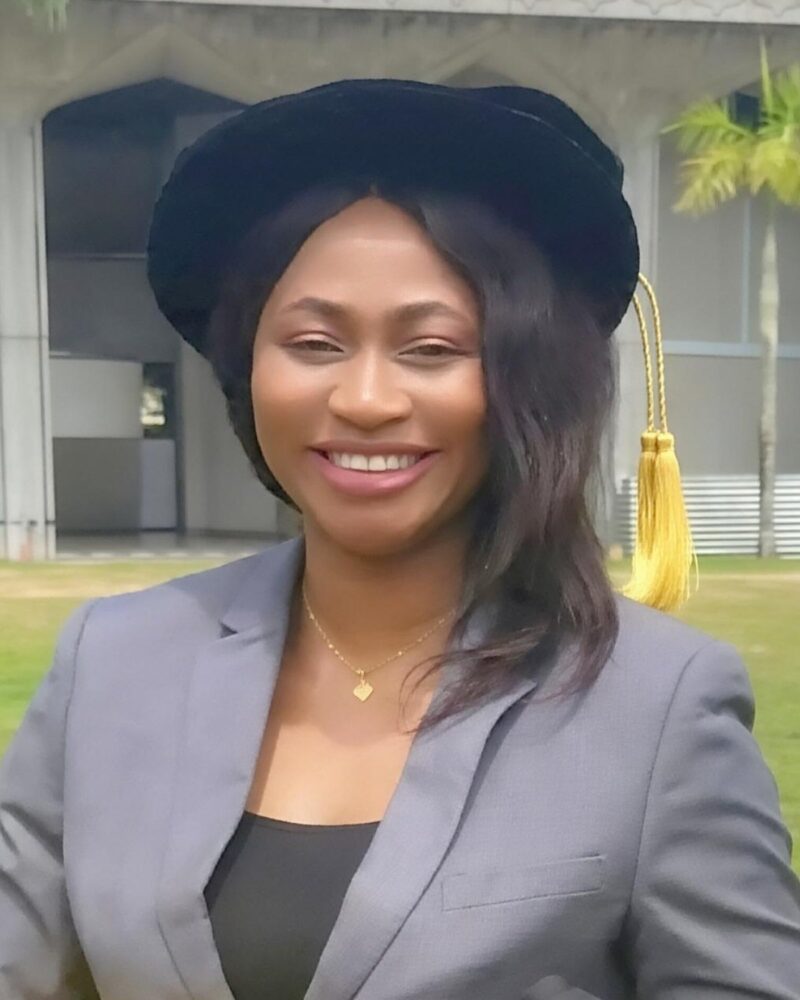
Dr. Tina
Lead Instructor
Dr. Tina is a Master Braider and the Lead Instructor of Celegant Braiding Academy. She has braided more than 3,500 clients since 2016, has run her own salon since 2015, and teaches every Academy program personally, with a co-instructor alongside her.
- Master Braider
- Braiding clients since 2016, and running her own salon since 2015
- Experienced braider and loctician
- Experienced wig maker, and wig and weave installer
- A working braider at Celegant Hair Edmonton, not only an owner
Why that matters for this particular certification. Crochet is a published service at Celegant Hair Edmonton, the professional braiding salon at the same address. The scheduling and margin arguments in the final module come from running a working salon, not from a business textbook.
Dr. Tina teaches from experience rather than from theory, with a real example behind every point, and she adapts her pace and her explanations to how each student in the room actually learns. Her approach in her own words is on the About page.
Questions braiders actually ask
What braid pattern goes under crochet hair?
It depends on how the client wants to wear it, and that is the point of module 2. A straight-back base for hair worn down or back. A beehive, or circular, base for ponytails, updos and dense curly styles. In either case the base must be flat and low-profile, with rows spaced close enough to hold density and open enough for the hook to grab, and the ends sealed so nothing pokes through. A bulky base shows through the install and catches your hook.
Why can you see my knots?
Because you are tying the standard loop knot and it is sitting proud at the scalp. Module 3 teaches the invisible knot, a method that lays flat and hides under the hair, and you will tie ten of them and be assessed on a scalp close-up of your best three. It is the single most important visual in the certification.
Are the five install methods real, or is that just marketing?
They are genuinely different techniques with different results. Cornrow crochet loops hair onto cornrows: fast, secure and dense, but the part and perimeter read less natural. Wrapped singles attach each loc to its own small plait and wrap it: far more natural per loc, slower. Perimeter singles with a cornrow centre gives the illusion of a full singles head at a fraction of the time. Connected front singles refines that further for a flexible hairline. Miracle knots use pre-threaded pieces where the knot forms on the thread, so the root stays invisible and flat. Module 4 spends two full weeks on them.
What are miracle knots?
The technique behind full boho braids in a few hours instead of eight or nine. You braid the natural hair into simple plaits, with no bulk braiding hair fed in, then attach pre-threaded crochet pieces strand by strand, two to four per braid, roughly every two inches. Because the knot forms on the thread rather than on the hair, the root stays flat and invisible. The signature fault is the hair knotting instead of the thread, and you will create it and rebalance it in front of the instructor.
How long does a full head of crochet actually take?
Faster than a comparable braid install, which is the whole proposition, but the honest answer is that it varies by method, style and your own pace, so the number you quote a client should be one you have timed yourself. What you get is realistic benchmarks by style, a timed baseline of your own work, drills, and a re-timed comparison so you can see your own improvement.
Is crochet actually gentle on hair?
Comparatively, yes. The hair attaches to a braided base rather than being installed strand by strand under tension, and takedown is straightforward when done correctly. But the perimeter and hairline still need care, because that is where knots pull hardest. A full lesson in module 2 is entirely edge safety, and safe takedown, cutting knots without cutting natural hair, is taught in module 5.
This guidance is educational and is not medical advice.
Do you teach faux locs?
Crochet faux locs, yes: installing pre-made loc hair, distributing it so it hangs naturally, and customising the length and ends. Real loc creation, maintenance, repair and extensions on a client’s own hair is a separate discipline and a separate certification. See the Locs Specialist track.
Should I charge less because crochet is faster?
That is the pricing trap, and the final module is built to get you out of it. The client is buying the finished look, the customisation and your judgement about method, not your hours. Crochet’s speed is a margin advantage: more clients per day at a fair price. You will build a menu priced by style and customisation rather than by time, and get cohort feedback on it.
Do I need to take Foundations first?
No. There is no entry requirement for this certification. Anyone with enough experience can apply directly. Foundations is our recommended starting point for beginners, not a gate. For this track specifically, your cornrow needs to be genuinely solid, because every install sits on one. If it is not yet, start at Foundations.
Is this a licence to braid hair professionally in Alberta?
No. Celegant issues a professional skills certificate, not a provincial trade certificate, licence or government credential. Read the honest answer on Alberta’s rules.
What if I miss a session?
See refunds and rescheduling for the current policy.
Where this leads next
Locs is the honest continuation. You will be installing crochet faux locs, and this is how you serve the client who then decides to grow real ones. It is also the only specialty built on recurring maintenance rather than one-off installs. Twists is your gentle long-wear service where crochet is your fast one, and between them you can fill a week without burning out on eight-hour appointments. The Empire Blueprint is the operations side if crochet’s speed has you thinking about volume, staff and a second chair. It is online, self-paced and open to any experience level, and it opens in June 2027.
Specialty certification
Locs Specialist
The deepest track we teach: loc creation, maintenance, repair, extensions and the long-term care a years-long client relationship needs.
- 10 weeks
- 60 contact hours
- In person, Edmonton
$1,997
Early-bird $1,497, first 5 registrations, code LOCS at checkout
Specialty certification
Twists Specialist
Full-head protective twists and flat twists with seamless extensions, plus passion, Senegalese, kinky and spring twists.
- 8 weeks
- 48 contact hours
- In person, Edmonton
$1,997
Early-bird $1,497, first 5 registrations, code TWISTS at checkout
Business program
Certified Salon Business Professional: The Empire Blueprint
The business of running a salon, online and self-paced: setup, financials, staffing, client systems, marketing, growth and a capstone business plan.
- Online, self-paced, lifetime access
$2,997
Early-bird $2,497, first 5 registrations
What this credential is, and what it is not
Celegant Braiding Academy issues a professional skills certificate. It is awarded by us, based on assessed practical work. It is not a provincial trade certificate, not a government licence, and not an apprenticeship credential.
In Alberta, Hairstylist is a compulsory-certification designated trade. Braiding is not named specifically in the government sources we reviewed, and we will not guess on your behalf. The authoritative answers live with the province:
- Restricted Activities List, Hairstylist, Alberta Apprenticeship and Industry Training: tradesecrets.alberta.ca
- Barber and Hairstylist certification in Alberta: alis.alberta.ca
- Apprenticeship and Industry Training Client Service Offices: call them and ask about your exact situation.
If your plan is to cut and chemically treat hair as a licensed hairstylist, the apprenticeship route is the one you want, and we will tell you that plainly. Our program is for braiding, twisting, locing, crochet and install work, and for the business skills that go with them.
Educational information only. This is not legal advice.
Scalp and hair safety. Tension, traction and scalp-health guidance in this program is educational and is taught for the safe practice of protective styling. It is not medical advice. Refer clients with hair loss, scalp conditions or suspected reactions to a physician or another qualified professional.
Ready?
Download the full curriculum: every module, every lesson, all five install methods, the hair-and-hook guide and the assessment standard.